
Leaks found, joints sealed
Duct Repair and Sealing for Biloxi Homes
We pressure-test the ductwork, find where the air escapes and seal it, so the cooling reaches the rooms instead of the attic.
Free, no-obligation estimates. We answer the phone or call back the same working day.
What the work is
Duct Repair in Biloxi
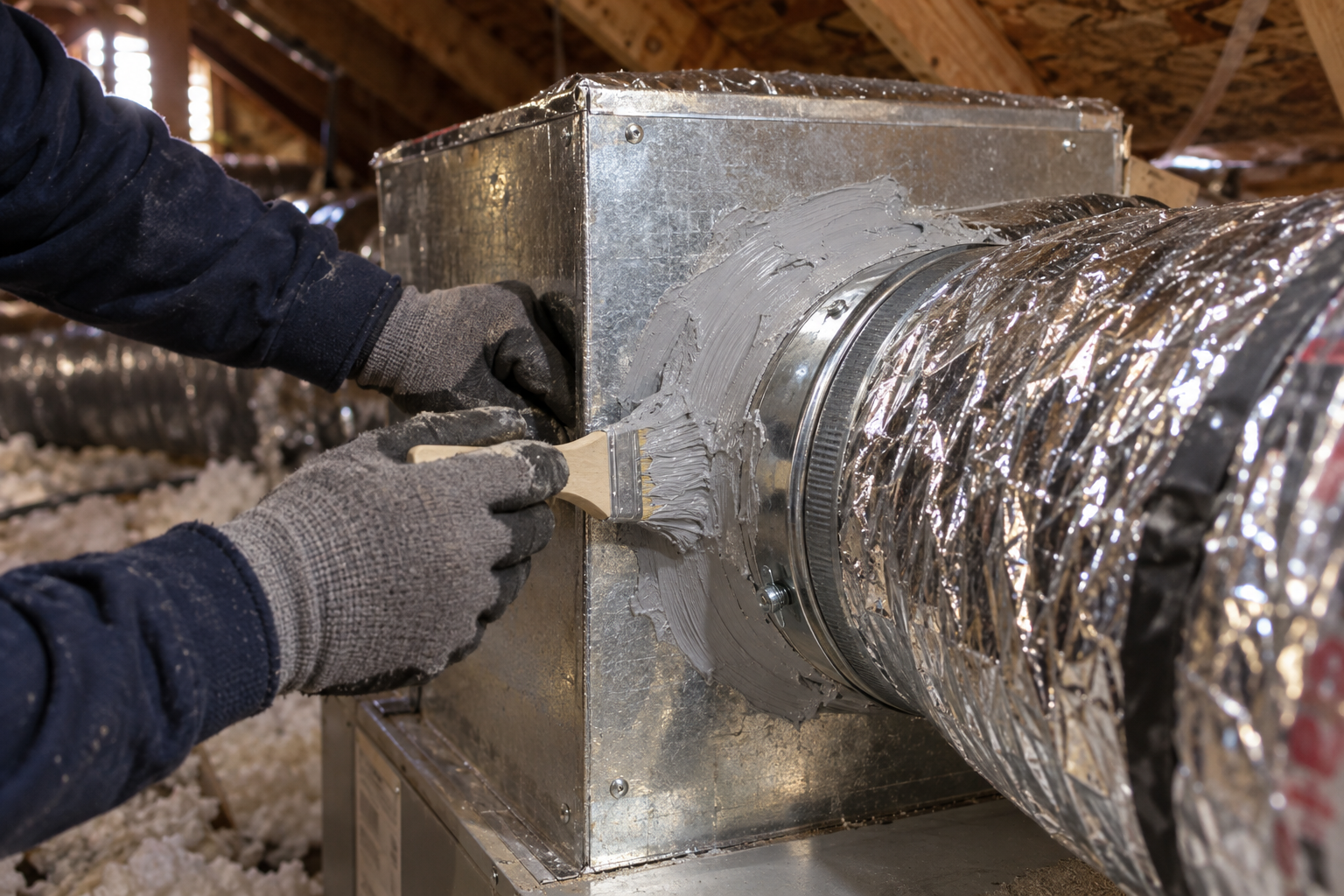
Duct repair on residential and commercial buildings finds the leaks with pressure tests and seals them with mastic and UL-181 tape.
Where the ducts run through a Biloxi attic, every open joint pulls in hot, damp attic air and spills cooled air into the insulation. "Mastic" is a thick duct sealant brushed over the seams; together with UL-181 tape it closes them against air loss and the condensation that follows it.
What a repair covers
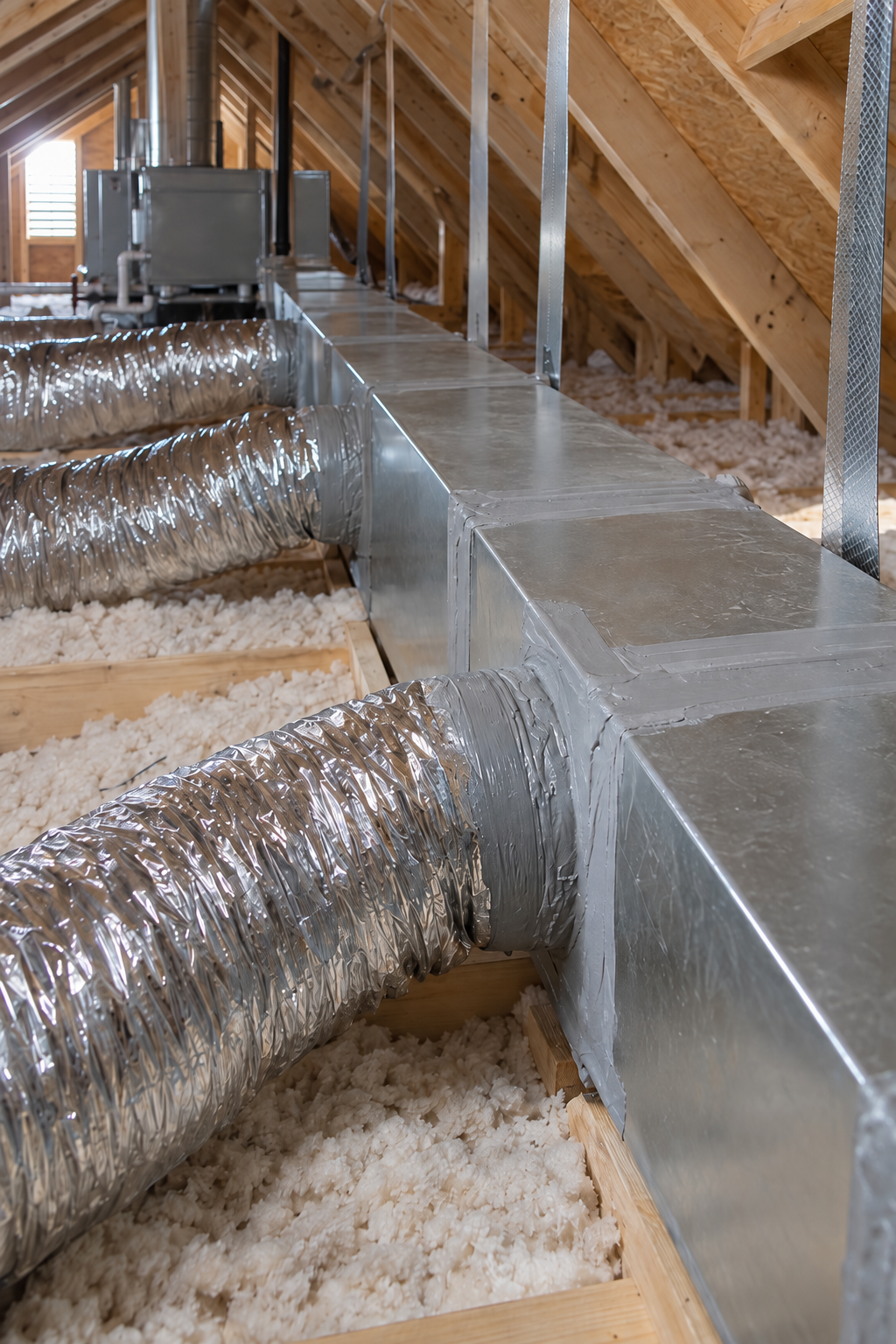
- Supply trunksThe main sheet-metal runs leaving the "air handler"
- Flex branchesThe round runs out to each room's ceiling vent
- ReturnsThe ducts that carry room air back to the unit
- Plenum collarsWhere the branches meet the box at the unit
Before anyone opens the attic
Signs of Leaking Ducts
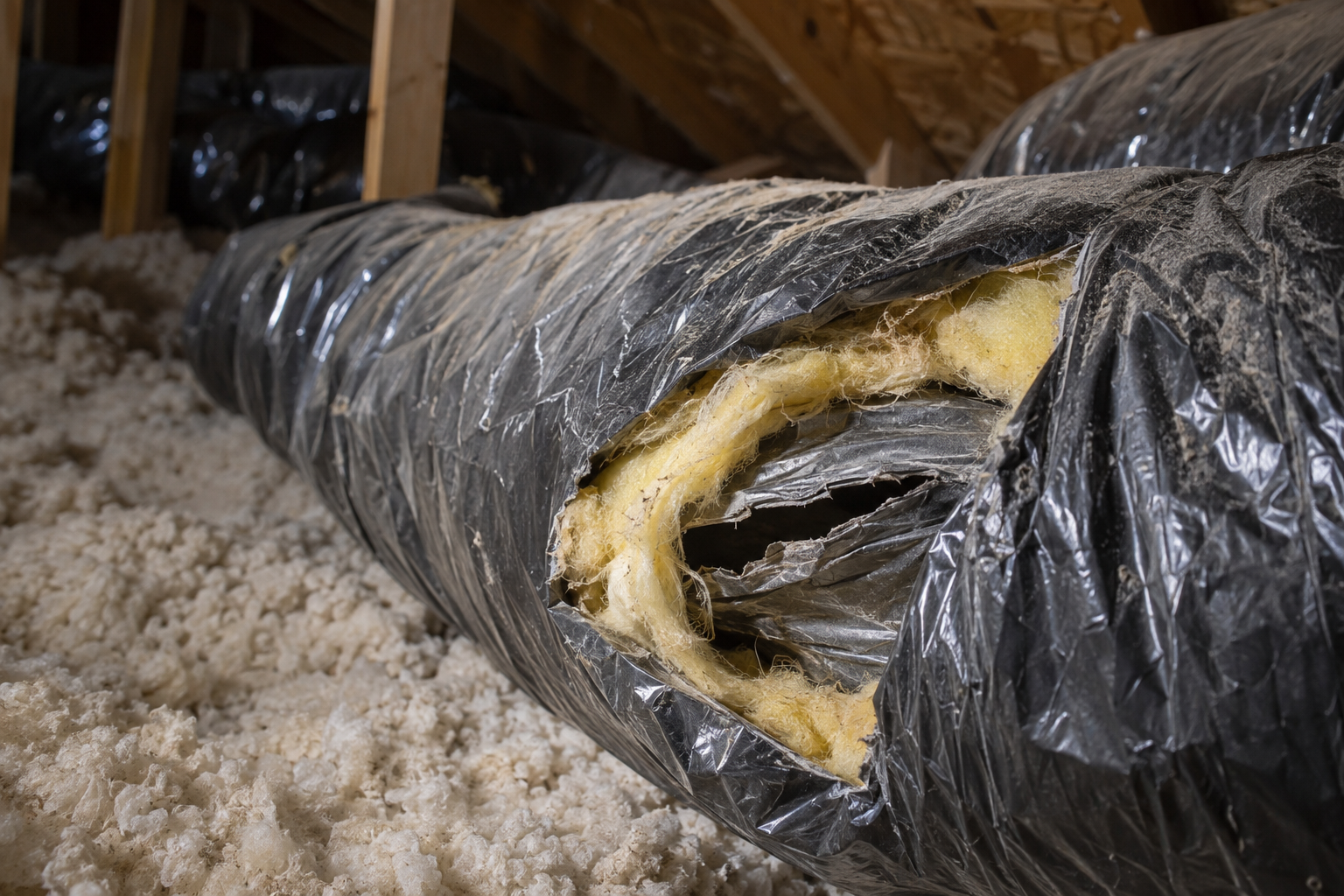
Dust, weak airflow, rooms that never cool and moisture around the ducts all point to ducts that are leaking or were never sealed.
Each of these shows up from inside the house, no ladder needed:
Dust in the house
Shelves go grey again days after dusting, because an unsealed return pulls attic dust into the air stream and blows it out the vents.
Weak airflow
A hand at the vent feels barely a breath. Supply ducts without proper return air cause pressure problems, and a crushed run starves the room.
Rooms that never cool
The back bedroom stays warm while the hallway is cold, since the branch feeding it loses its air on the way there.
Sweating ducts
Water beads on the duct jacket or drips from a ceiling vent where cold metal meets damp air through a gap in the seal.
High energy bills
Central air is efficient, but duct leaks waste energy: the system runs longer to replace the air it loses.
From the readings to a tight system
How Ducts Are Tested and Sealed
Ducts are tested for leakage and "static pressure", rebuilt where they have failed with sheet-metal trunks and short, tensioned flex, sealed with mastic and UL-181 tape, and then balanced.
-
Take the readings
Manometers show how hard the blower is pushing, and anemometers show how much air actually leaves each vent.
-
Size the new runs
Duct design calculations set the airflow, trunk sizes, diffuser locations and returns, starting from the "Manual J" load calculation in ACCA Manual J.
-
Rebuild what failed
Rigid metal trunks with short flex branches, strapped and supported to code, give quieter and more efficient airflow than long sagging flex.
-
Close every seam
Takeoffs, collars and the plenum joints get sealed by hand, the hard-to-reach ones at the unit included.
-
Retest and balance
Commissioning repeats the leakage test, balances the airflow, sets the thermostat and zoning and ends with a final cleanup.
We quote the whole job before we start. (228) 364-8743
What Duct Repair Costs
Duct repair is priced by run distance, attic or crawlspace access and zoning, and it falls within the typical range published for repairs, shown here.
Your own figure comes from the walk-through and is written down before any work begins. What moves it:
- How far the damaged run reaches from the unit
- Whether the ducts sit in the attic or the crawlspace
- Zoning, when the ducts feed separate zones
Duct Codes and Inspections
Ductwork installed with a system must meet mechanical codes, and the job goes through inspection backed by layouts and pressure test reports.
The paperwork earns its keep past the inspection. Poor duct fittings raise fan power draw and cut cooling capacity, so a tight test result is how you know the repair did its job.
- Layout
- Where each run goes and what size it is
- Equipment data
- The unit the ducts serve
- Smoke and pressure tests
- The leakage readings on record
Cool air belongs in the rooms, not the attic.
Ring us and we will come out, test the ducts and quote the whole repair in writing before anything begins.
- No surprise charges after the quote
- Monday to Saturday, 7 am to 6 pm
- We call back the same working day