
AC Repair for Biloxi Homes and Businesses
Warm air, a system that keeps cutting on and off, water by the inside unit: we measure our way to the part that failed and fix it, at the house or at the shop.
We answer the phone or call back the same working day. Monday to Saturday, 7 am to 6 pm.
Before you call
Signs Your Air Conditioner Needs Repair
These five signs mean the air conditioner needs repair, and catching them early is what keeps a drain or coil problem from turning into water damage or a dead system.
- Warm air from the ventsThe fan runs, but what comes out of the registers is barely cooler than the room.
- The system keeps turning on and offThe trade calls it "short cycling": the unit quits before it has pulled the moisture out, and the house stays cool but clammy.
- Water around the indoor unitMost often a clogged "condensate line", the drain that carries water away from the inside coil.
- Ice on the copper linesFrost on the lines between the units means something inside the system is off, often the refrigerant or the airflow.
- A loud or humming outdoor unitA hum with no fan turning, or a new rattle or grind, points to a part on its way out.
What usually fails
Common AC Repairs
These are the repairs an air conditioner most often needs. Each starts small, and most of them, left alone, wear on the compressor until it fails too.
-
Refrigerant leak and recharge
Low refrigerant cuts how well the system cools and can damage the compressor over time. The leak is found and sealed before the system is recharged, by a technician certified to handle refrigerant.
-
Capacitor replacement
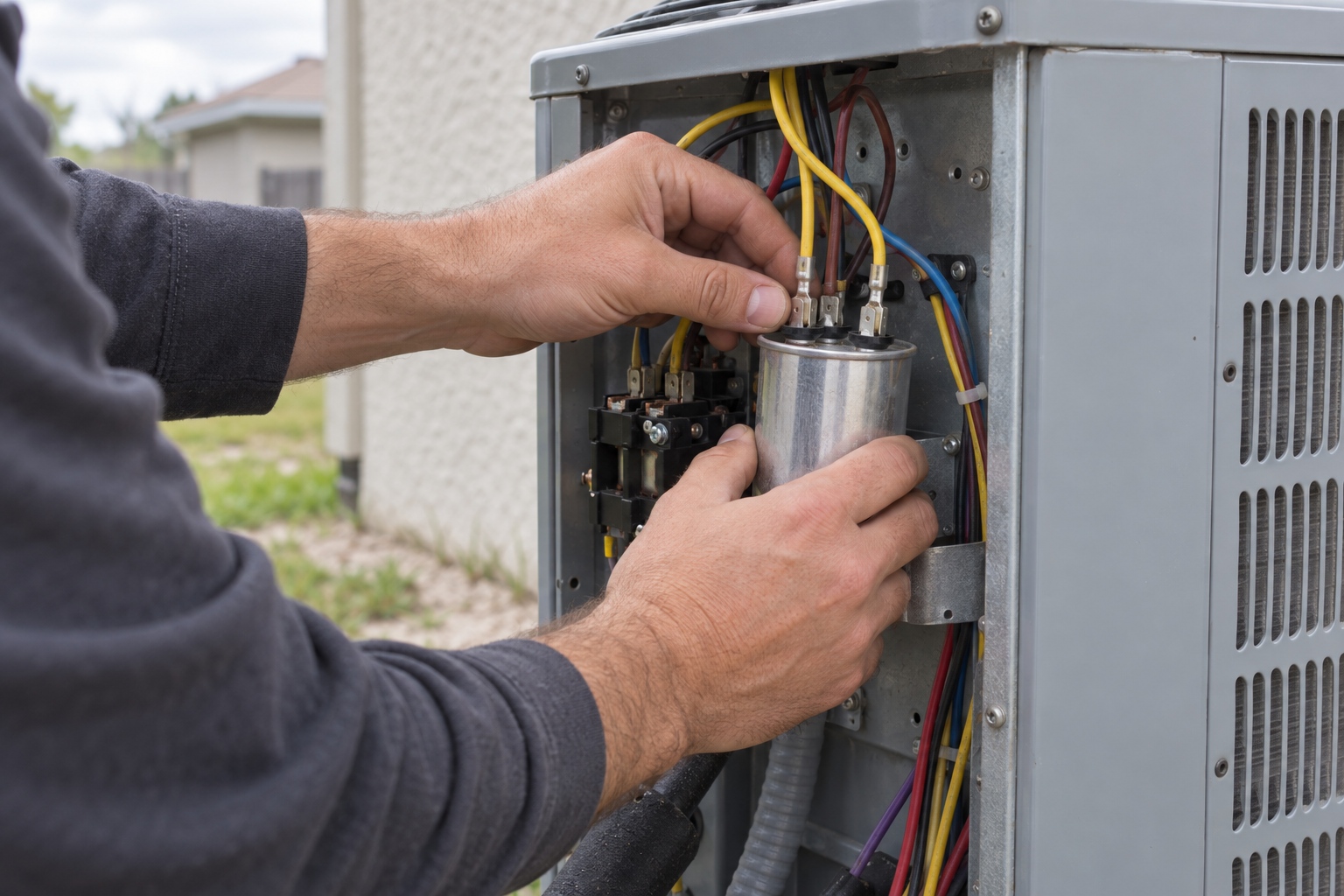
The capacitor gives the outdoor motors their kick to start. When it fails, the unit hums and will not get going, and a new capacitor usually has it running again.
-
Condenser coil cleaning
The "condenser coil" in the outside unit sheds the heat pulled out of the house. Caked with dirt and pollen it cannot, and a dirty outdoor coil will eventually damage the compressor.
-
Condensate line clearing
The drain from the indoor coil clogs over a humid summer and water backs up around the unit. Clearing it early keeps the water off the floor and out of the ceiling.
-
Compressor replacement
The compressor is the heart of the system and the costliest part to replace. On an older system it often tips the choice toward a new unit, and we talk that through with you plainly before anything is ordered.
How we find it
AC Repair in Biloxi
AC repair on residential and commercial systems comes down to finding the part that failed and fixing it, and we find it by measuring rather than guessing.
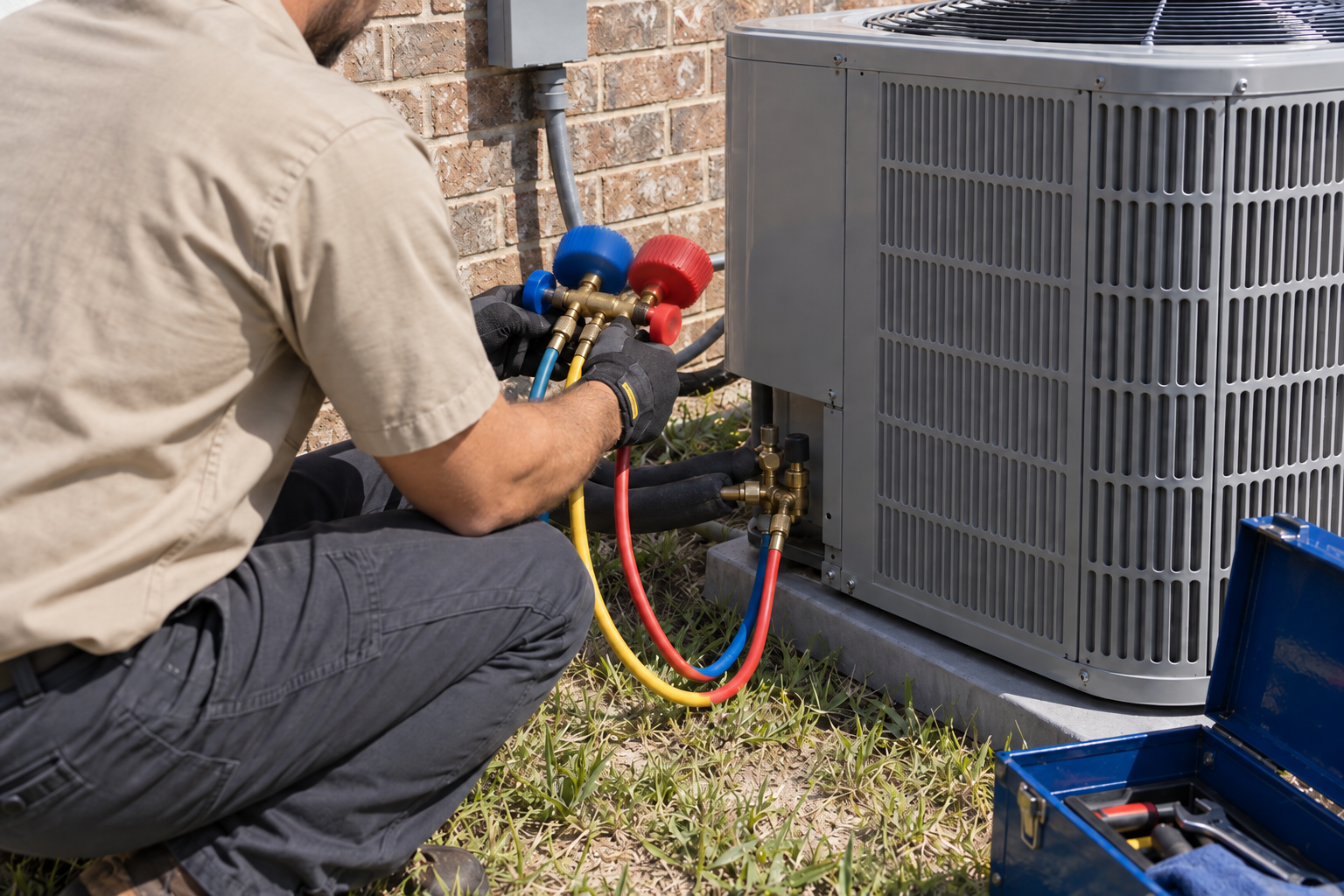
A technician diagnoses a system by its readings. These four, taken at the indoor and outdoor units, say which part has quit:
- PressuresWhat the refrigerant is doing on each side of the system.
- TemperaturesOf the copper lines and of the air going in and coming out.
- Amp drawHow hard the compressor and each motor are working.
- AirflowWhether enough air is crossing the indoor coil.
A house usually runs a split system, a condenser outside and an "air handler" inside; a shop or an office often runs a packaged rooftop unit. The readings work the same way on both.
From your call to cool air
-
You call
Tell us what the system is doing. If we miss you, we ring back the same working day.
-
We arrive
At the time we gave you, at the house or at the business.
-
We measure
Pressures, temperatures, amp draw and airflow, until the failed part shows itself.
-
You see the price
The whole repair is priced before we start, and that is what you pay.
-
We fix it
The failed part is repaired or replaced, the cooling comes back, and the work area is left clean.
Free, no-obligation estimates. (228) 364-8743
What it costs
What AC Repair Costs
AC repair is priced by the part that failed and the age of the system, and the figure lands within the range published for the area.
$150 to $1,200Typical AC repair in Biloxi
About $300Average for a common repair
Those are typical figures for the area, not our quote. Your price comes from the diagnosis, written down before any work starts, and the estimate itself is free. A small part on a younger system sits near the bottom of that range; a compressor on an older one is what pushes past the top.
Hands off the refrigerant
Leave the Repair to a Technician
A repair you try yourself can leave the unit worse off than before, and anything that touches the refrigerant is work for an EPA-certified technician.
Pulling panels, jumping a contactor or topping off "Freon" from a store kit can damage the unit further, and a poorly done repair causes more trouble than the one it set out to fix. Anyone who handles refrigerant in stationary air conditioning holds technician certification under the Clean Air Act, under rules published by the U.S. EPA.
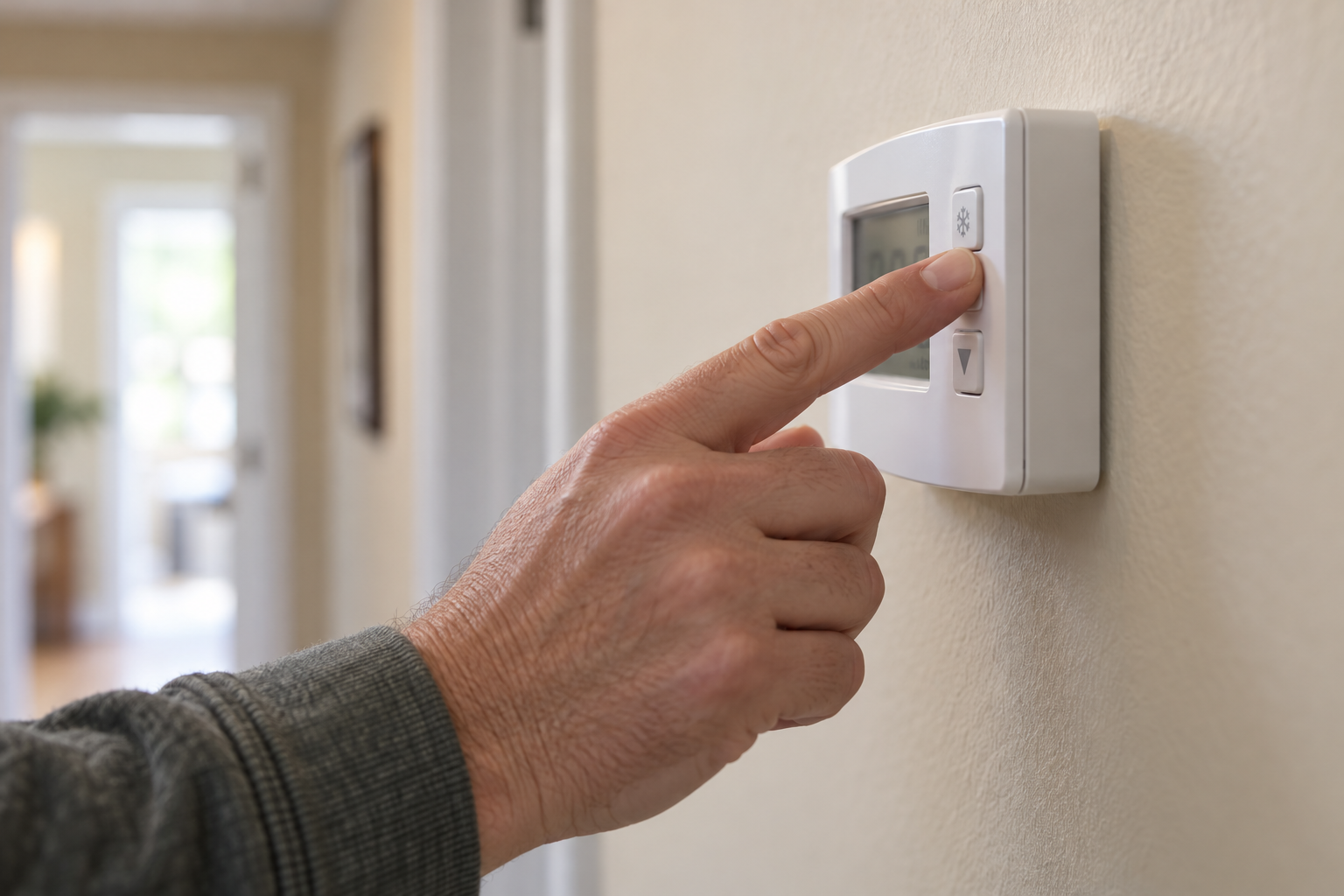
What is safe to do: check the thermostat setting and the breaker, change a dirty filter, then call. If the house is heating up with an older adult or a young child in it, call sooner; the National Weather Service counts them among the people most at risk from heat.
Air running warm?
We will find out why.
Call and tell us what the system is doing. We come out when we say we will, find the failed part, and quote the repair before any work starts.
- Quoted before we start
- Monday to Saturday, 7 am to 6 pm
- Clean-up when we finish